So, you’ve finally sat down with your doctor, and the conversation has shifted from “let’s monitor your sugar” to “let’s try a new medication.” It’s a heavy moment, maybe even a little overwhelming. You’re likely staring at a prescription for RYBELSUS®, a small, unassuming tablet that’s different from the shots most people associate with this class of drugs.
If you’ve spent any time reading about GLP-1 medications, you’ve probably heard a lot of noise about injections. But here you are, looking at an oral option. It’s a legitimate way to manage type 2 diabetes, specifically designed for adults who need help controlling blood sugar levels and reducing their A1C. It isn’t a magic pill that replaces a healthy lifestyle, though. Your doctor will likely pair it with diet and exercise to get the best results.
Understanding how this works can take some of the mystery out of it. You aren’t just popping a pill whenever you feel like it; there is a very specific rhythm to how you take it. It’s about absorption, timing, and patience. If you miss the window or take it with too much water, you might be throwing away the efficacy of the dose entirely.
Before we get into the nitty-gritty of your morning routine, it’s worth looking at what this drug actually does inside your body. It mimics a hormone your body naturally produces, which helps your pancreas release insulin when your blood sugar is high. It also slows down how quickly food leaves your stomach, which is why people often feel full much sooner than they used to.
How the Dosing Schedule Actually Works
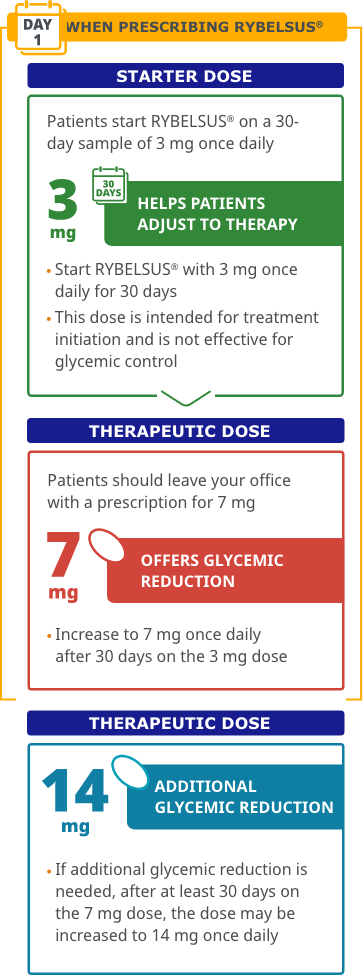
You won’t just wake up one day and start on a high dose. The way doctors approach RYBELSUS® is much more gradual to help your body adjust. It’s a titration process, which is just a fancy way of saying they’re slowly turning up the volume on the medication to minimize the shock to your system.
Typically, the journey begins with a 3 mg dose. You’ll stick with this 3 mg dose for the first 30 days. This initial month is essentially a “test run” to see how your stomach handles the semaglutide. If your doctor decides it’s working well and your body is tolerating it, they will prescribe a 7 mg dose to take after that first 30-day period has passed.
Timing is everything with this specific tablet. You have to take it at least 30 minutes before any food, other medications, or other drinks. Usually, this means taking it first thing in the morning with just a small sip of plain water. If you take it with a full glass of water, you’re actually making the pill harder for your body to absorb. It’s a strange paradox, isn’t it? The less you drink with it, the better it works.
Many patients find the morning routine a bit of a hurdle at first. You have to be disciplined. If you’re someone who hits the snooze button five times and then rushes out the door with a large coffee, this medication might be a struggle. You’ll need to carve out that quiet 30-minute window before breakfast to ensure the medication does its job properly. If you’re looking for more specific guidance on different strengths, you might find yourself searching for a rybelsus 4 mg prospect to understand how various levels of the drug interact with your body’s needs.
What to Expect When Your Body Adjusts
Side effects are the conversation everyone wants to have. Because this medication slows down gastric emptying, meaning food stays in your stomach longer, your digestive system is going to feel that change. It’s not a sudden transformation, but rather a shift in how your body processes fuel. Most people report some level of nausea, especially when they first start or when their dose increases.
It isn’t just nausea, though. You might notice some changes in your appetite or how your stomach feels after a meal. Some people experience a decreased interest in food, which is the goal for managing weight-related diabetes, but it can feel strange if you aren’t expecting it. Other common side effects include:
- Nausea or a feeling of being “queasy”
- Occasional stomach pain or bloating
- Changes in bowel movements (constipation or diarrhea)
- A general feeling of fatigue as your body adjusts
Have you ever felt that sudden “full” sensation halfway through a meal, even if you’ve only eaten a few bites? That is the GLP-1 agonist at work. While it helps with sugar control, it also changes your sensory relationship with food. For some, this is a relief; for others, it feels like a loss of control. It’s a subjective experience that varies wildly from person to person.
There are also more serious warnings to keep in mind. The FDA has included a warning regarding the risk of thyroid C-cell tumors. While this was primarily observed in animal studies, it’s a standard piece of information you need to be aware of. If you have a personal or family history of certain thyroid issues, your doctor will likely be extra cautious about prescribing this to you.
Comparing Oral vs. Injectable Options
The big question on everyone’s mind is whether this is “better” or “worse” than the weekly injections like Ozempic. It isn’t really a matter of better or worse, but rather a matter of lifestyle and how your body responds. The active ingredient, semaglutide, is the same, but the delivery method changes everything. The oral route is more convenient for some because you don’t have to deal with needles, but it requires much stricter timing.
Because the tablet has to pass through your digestive system without being destroyed by stomach acid, the amount of medication that actually reaches your bloodstream is much lower than what you get from a subcutaneous injection. This is why the dosing is so specific and why the timing of your morning ritual is so critical. If you’re looking for a direct comparison, the table below helps clarify the main differences in how you might approach them.
| Feature | RYBELSUS® (Oral) | Injectable Semaglutide |
| Frequency | Daily | Weekly |
| Administration | Small pill with minimal water | Subcutaneous injection |
| Timing Constraints | Strict (30 mins before food) | Flexible (usually once a week) |
| Primary Use | Type 2 Diabetes | Type 2 Diabetes / Weight Management |
If you find that you’re struggling to keep up with the daily pill, or if your nausea is too intense, your doctor might suggest switching to the injectable version. Some people find the weekly injection much more stable because the levels in their blood stay more consistent, whereas the daily pill has more “peaks and valleys” in its concentration. It’s a trade-off between the ease of a pill and the stability of an injection.
Managing Your Long-Term Success
Living with type 2 diabetes is often a marathon, not a sprint. Medication is a tool, but it isn’t a complete solution on its own. You’ll likely find that as the medication works to lower your A1C, you’ll need to be more mindful of your carbohydrate intake. Since the drug slows digestion, eating large, heavy, or greasy meals can lead to significant discomfort or even vomiting.
It’s also helpful to keep a log of how you feel during the first few months. When you hit that 7 mg dose increase, keep track of your symptoms. If the nausea is manageable, great. If it’s making it impossible to eat, you need to have that data ready for your next doctor’s visit. Don’t try to “tough it out” by skipping doses, as that can lead to inconsistent blood sugar readings and make it harder for your doctor to judge if the medication is actually working.
Stay hydrated, but not at the wrong time. You can drink water throughout the day, but remember that your morning dose needs a very small amount of water. Over-hydrating during the dosing window can wash the medication too quickly through your system, meaning it won’t have time to absorb properly. It’s a fine line to walk, but once you get into the rhythm, it becomes part of your morning routine, much like brushing your teeth.
The goal is to find a balance that works for your life. Whether you’re using RYBELSUS® to keep your blood sugar in check or as part of a broader plan to manage your weight and overall health, the most important thing is consistency. It’s a tool that requires a bit of discipline, but for many, it provides a level of control that was previously hard to reach.
Common questions
What is the downside of Rybelsus?
Common side effects include nausea, vomiting, and diarrhea, and the oral pill format requires strict timing with food and water to ensure proper absorption.
Why is Rybelsus being discontinued?
There is no widespread discontinuation; however, supply fluctuations may occur due to manufacturing transitions or high market demand for semaglutide products.
What should you not eat while taking Rybelsus?
You should avoid eating or drinking anything other than plain water for at least 30 to 60 minutes before and after taking your dose to ensure medication absorption.
Is Rybelsus stronger than Ozempic?
Both contain semaglutide, but Ozempic is an injectable medication that typically reaches higher peak concentrations in the bloodstream compared to the oral Rybelsus.
How should I take Rybelsus correctly?
Take Rybelsus once daily on an empty stomach with no more than 4 ounces of plain water, at least 30 minutes before any food, other medication, or other beverages.